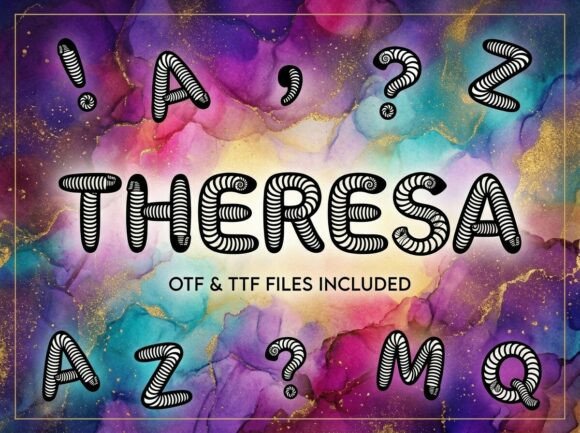
Theresa: A Decorative Display Font for Bold Branding
I was working on a brand identity project for a boutique skincare line when I first stumbled upon Theresa. The client wanted something that felt luxurious yet approachable, and the blank brand board in front of me felt like a challenge waiting to be solved. I reached for Theresa, and from the moment I applied it to the logo draft, I knew I had found the right voice for this brand.
Theresa for Luxury Packaging and Branding
Theresa is a stunning decorative display font designed to be the center of attention. Featuring unique artistic elements and a strong visual personality, this font is perfect for creators who want to stand out. When I placed it on a packaging mockup, the result was elegant and eye-catching. The curves and flourishes in Theresa added a sense of craftsmanship that complemented the organic ingredients of the skincare products. It didn’t feel too ornate, but just enough to make the brand feel exclusive and refined.
As a display font, Theresa thrives in short bursts of text. On product labels, it worked beautifully as a headline, drawing the eye without overwhelming the reader. I noticed that it performed well when paired with a clean sans-serif font for body copy, which helped maintain readability while keeping the overall design cohesive.
Theresa in Social Media and Web Design
Testing Theresa on a social media layout was another moment where I felt confident about its versatility. The font’s strong visual personality translated well into Instagram posts and Facebook ads. Whether used in a hero section or as part of a call-to-action button, Theresa brought a sense of energy and sophistication to the digital assets. It wasn’t just about looking good—it was about feeling good, which is essential for engaging an audience online.
On a website header, Theresa worked surprisingly well. Even though it’s a display font, the spacing and weight made it legible at larger sizes. I would recommend using it sparingly, though, especially if you’re designing for a long-form content page. For short phrases or headlines, however, it’s a powerful tool that can elevate your brand’s tone instantly.
Theresa for Business Cards and Brand Consistency
I also tested Theresa on business cards for the same skincare brand. The font’s unique artistic elements gave the cards a distinctive look that stood out in a stack of generic designs. It wasn’t just about aesthetics—it was about creating a memorable experience. The clients who received these cards often commented on how different they looked compared to other business cards, which is exactly what we wanted.
One thing to note is that Theresa works best when used consistently across all brand touchpoints. From logos to packaging to digital platforms, maintaining a unified visual language helps reinforce brand recognition. I found that using Theresa in key areas—like logos, headers, and promotional materials—helped create a strong, recognizable identity that resonated with the target audience.
Theresa and Font Pairing for Balanced Designs
When it comes to font pairing, Theresa pairs beautifully with a modern sans-serif font for contrast. I experimented with pairing it with Helvetica Neue for body text, and the combination felt balanced and professional. The contrast between the decorative display font and the clean sans-serif helped guide the reader’s eye through the design without causing visual fatigue.
For more creative projects, like editorial design or poster layouts, I found that Theresa could be used alongside a script font to add a layer of elegance. Just be careful not to overdo it—too many fonts can confuse the viewer and dilute the message.
Considerations Before Using Theresa in Client Work
While Theresa is a strong choice for display purposes, it may not be ideal for long body text or formal corporate branding. Its decorative nature makes it better suited for headlines, logos, and short phrases rather than extended paragraphs. If you're working on a project that requires high readability at small sizes, consider using it as an accent or decorative element instead of the primary typeface.
Before finalizing any client work, I always recommend testing Theresa in real-world conditions. Print samples, screen previews, and even user feedback can help determine whether it fits the brand’s needs. Also, don’t forget to check the commercial font licensing to ensure that you have the rights to use it in print, digital, or merchandise formats.
Overall, Theresa has become one of my go-to fonts for creative projects that need a touch of personality and flair. Whether you're designing a luxury brand, a boutique shop, or a creative studio identity, this font offers a unique way to express your brand’s character through typography. It’s not just a font—it’s a statement.